For generations, tree fruit has been more than a crop in North Central Washington. It has shaped the region’s landscape, workforce, businesses and even its sense of place.
You don’t have to see an orchard to know you’re in fruit country.
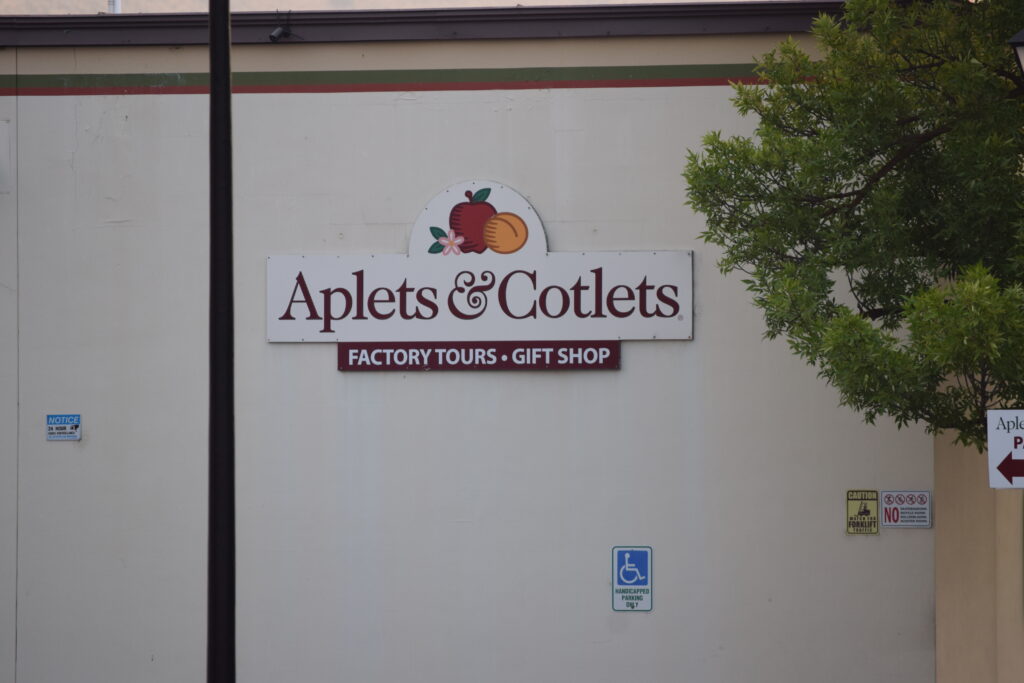
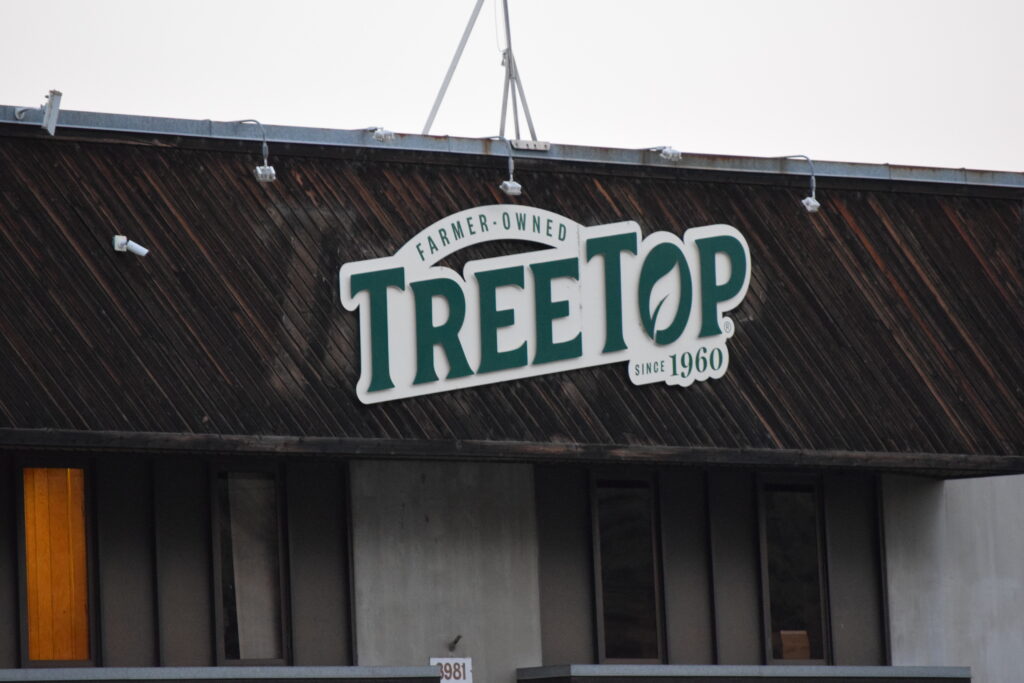
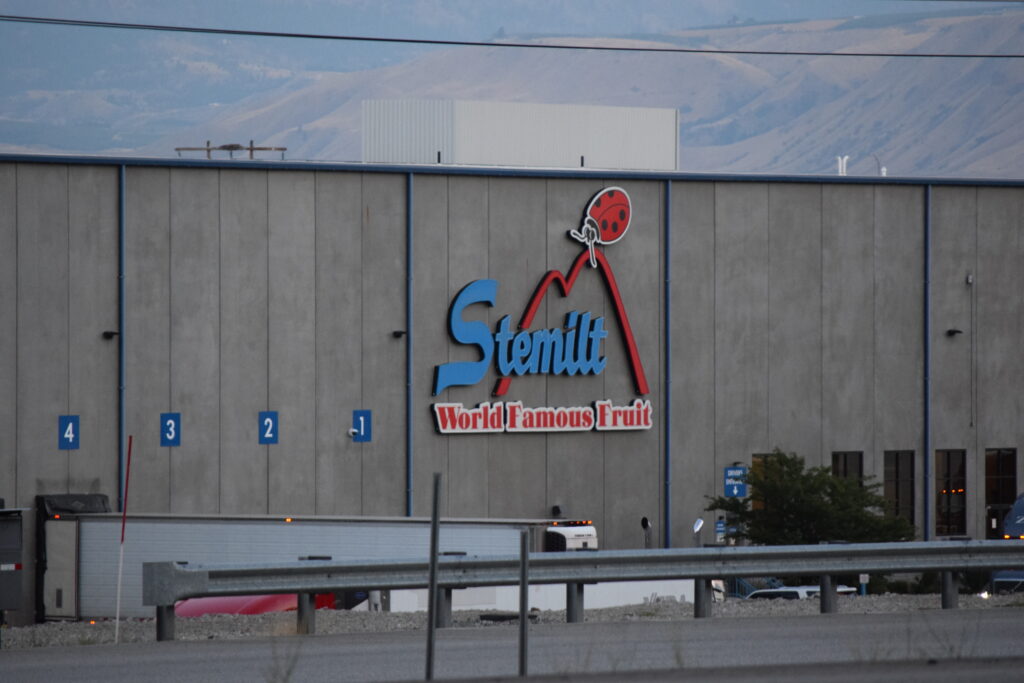
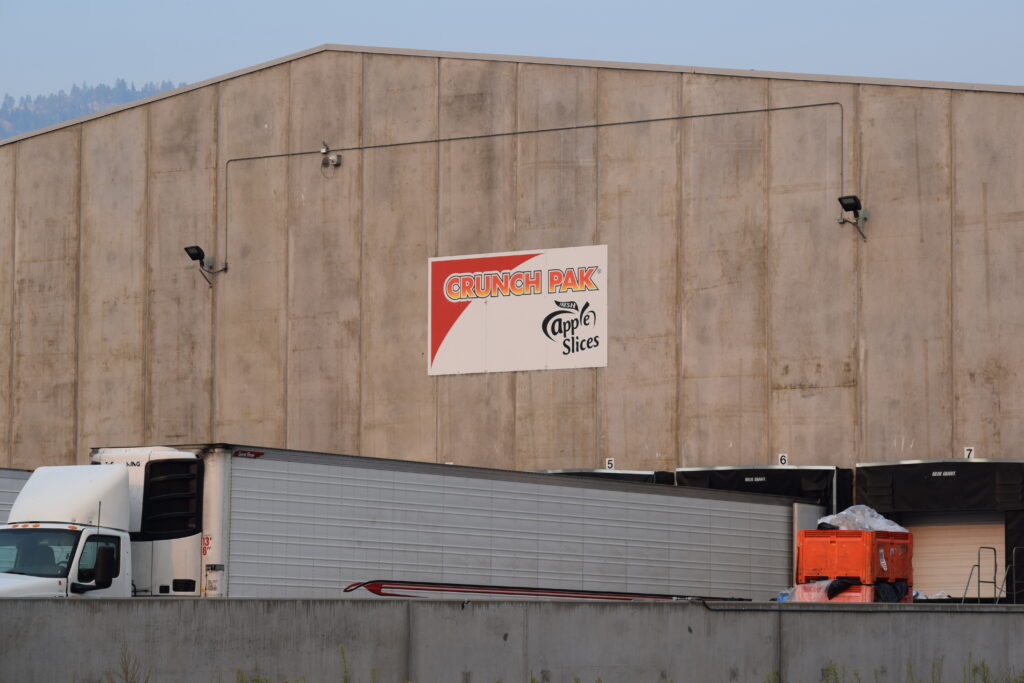
It is written on warehouse walls and packing sheds, on roadside signs and the names of businesses. It is sliced into bags, pressed into juice, cooked into candy and loaded by the truckload for markets hundreds or thousands of miles away.
And, of course, it still hangs from the trees.
For generations, fruit has shaped North Central Washington in ways that extend far beyond the orchard rows themselves. Apples became the region’s most recognizable symbol, but pears, cherries, apricots and other tree fruit helped build the same economy and culture, supporting generations of growers, workers, packers, processors and businesses.
Somewhere along the way, fruit stopped being simply something the region grew.
It became something the region was.
Growing an identity
Apples themselves are immigrants to the American story. Native crabapple species grew in North America, but the familiar domestic apple arrived with Europeans. By the early 1600s, English settlers were planting imported trees and seeds in New England, beginning an expansion that would eventually carry cultivated apples across the continent.
They reached what would become Washington much later. Apples were planted at Fort Vancouver in the 1820s, but for decades they remained primarily a local crop. The transformation into a commercial industry required something Central Washington conspicuously lacked: water.
The same dry climate that made large-scale agriculture difficult also offered advantages for tree fruit. Sunshine was plentiful, summers were warm and relatively low humidity reduced some of the disease pressures growers encountered elsewhere. Snow piled up in the Cascades every winter, providing a source of water if people could figure out how to move it where they wanted it.
And boy, did they.
Small irrigation ditches preceded increasingly ambitious canal systems. Around Wenatchee, commercial orchards began appearing in the 1880s. The Peshastin Ditch began opening land farther up the Wenatchee Valley, while larger projects followed. In the early 1900s, the Wenatchee Development Company, under the direction of engineer W.T. Clark, completed a roughly 16-mile gravity-flow canal capable of irrigating thousands of acres.
A bridge named for Clark still spans the Columbia River in Wenatchee, carrying a 4-foot pipe that delivers 24,000 gallons a minute of irrigation water to Douglas County.
Water made the orchards possible. Transportation made them an industry.
Rail service gave growers access to distant markets just as irrigated acreage was expanding. Fruit no longer had to be consumed, preserved or sold close to where it was grown. Apples and pears could leave the valley by the railcar.
The combination was transformative.
By the early 20th century, boosters were selling the Wenatchee Valley as a place “where dollars grow on trees.” Michael Horan, one of the valley’s prominent early orchardists, took nine varieties of apples to the National Apple Show in Spokane in 1908 and came home crowned the National Apple King.
The reputation stuck.
Wenatchee became the self-proclaimed “Apple Capital of the World,” and Washington became the nation’s leading apple-producing state by the 1920s.
But the orchards spreading through the valleys were never exclusively apple orchards.
More than apples
Drive through the Wenatchee Valley around harvest and the distinction is difficult to miss.
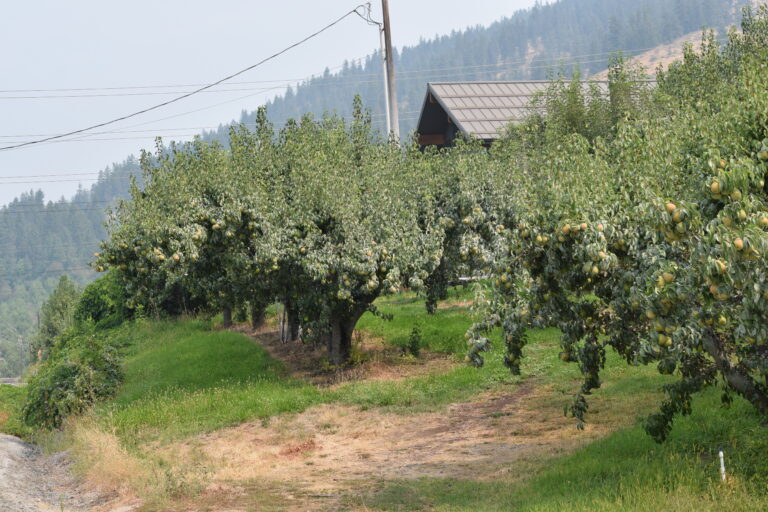
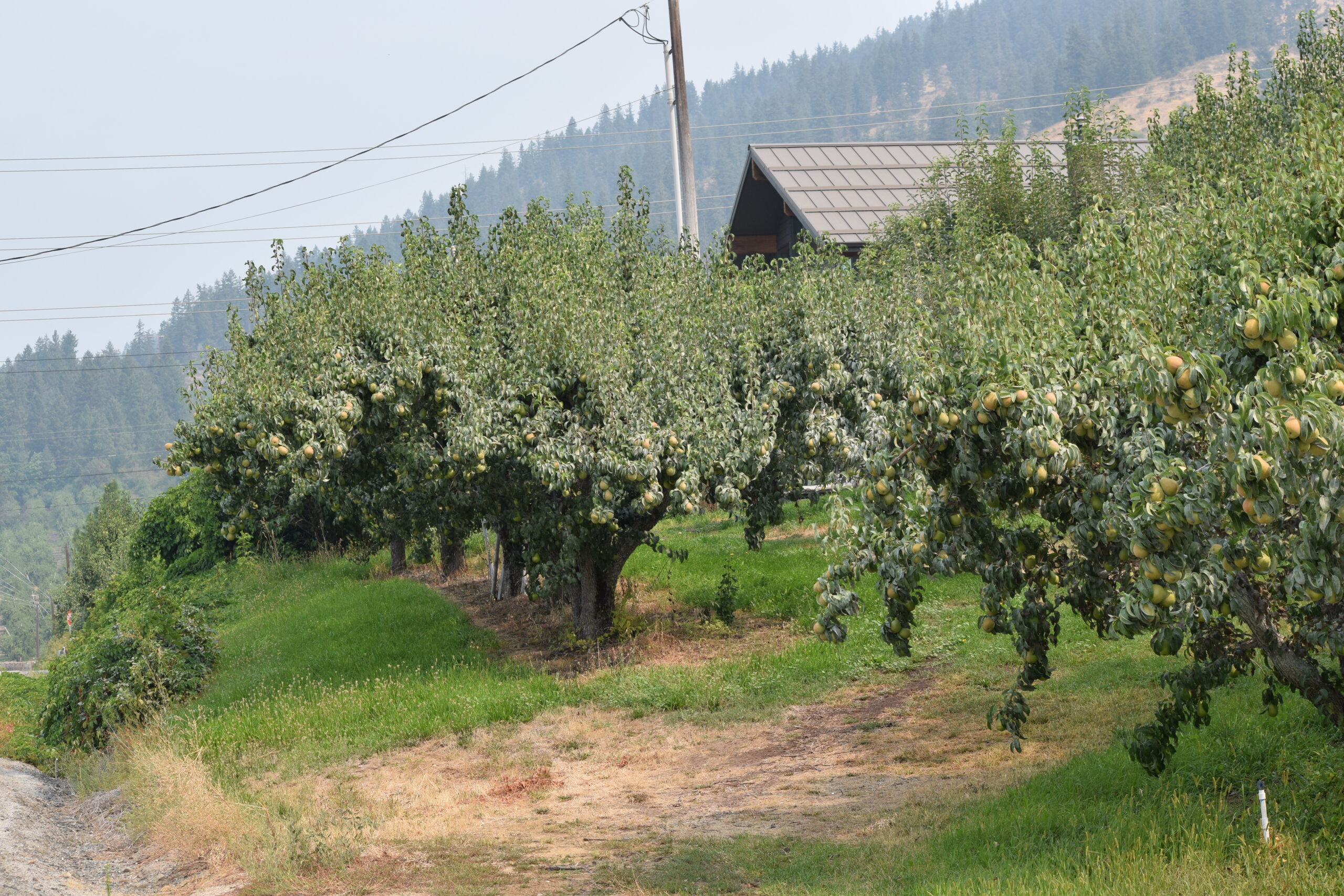
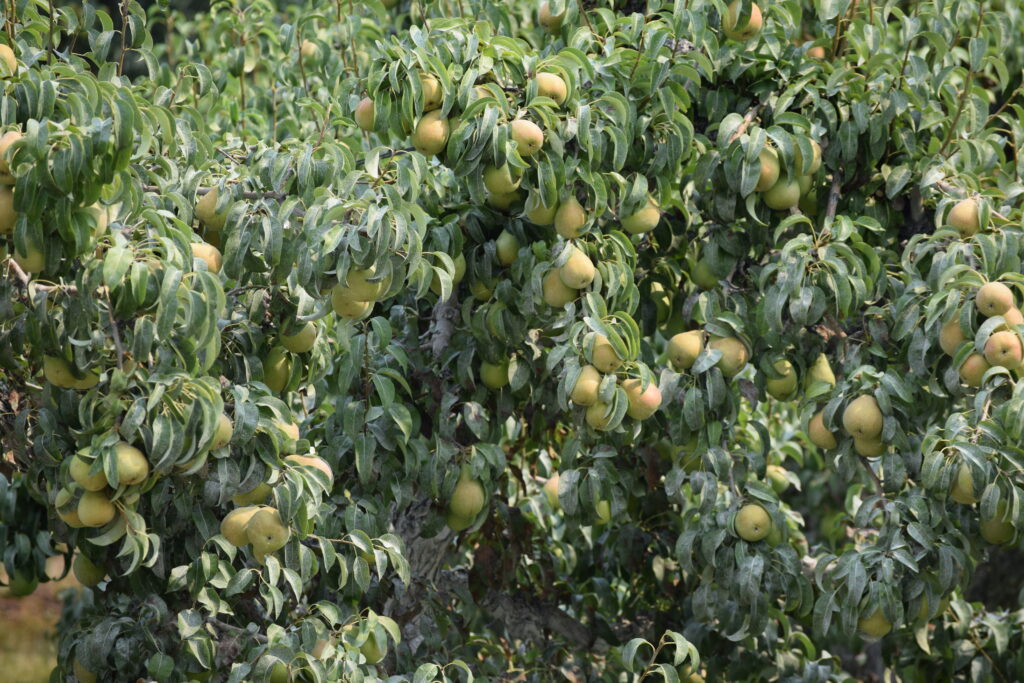
Pear trees, often broader and more irregular than the tightly managed rows associated with modern apple production, remain a defining part of the landscape around Cashmere, Dryden, Peshastin and the surrounding hillsides. Cherries thrive elsewhere across North Central Washington, while apricots, peaches and other tree fruits have long contributed to the region’s agricultural mix.
Each crop brought its own season, risks and markets. Together, they helped create something larger: an economy organized around trees.
Growing the fruit was only the beginning.
It had to be picked, sorted, packed, stored, processed, sold and shipped. Warehouses rose near railroad lines and highways. Box manufacturers supplied growers and packers. Cold storage extended the selling season. Advances in controlled-atmosphere storage eventually allowed fruit harvested in fall to reach consumers months later while retaining much of its fresh-picked quality.
Over time, names including Stemilt and Tree Top became familiar far beyond North Central Washington. Crunch Pak built a business around an even more specific proposition: take an apple, slice it and make fresh fruit convenient enough to compete with packaged snacks.
Although you can find Crunch Pak nationwide in grocery stores — it is the largest producer of sliced apples in the United States — its headquarters are still right in the heart of old town Cashmere.
Each represents another step away from the tree itself, but none exists without it.
The industry also required something no irrigation ditch, railroad or refrigerated warehouse could provide.
People.
Following the fruit
Tree fruit has always demanded enormous amounts of labor concentrated into relatively short periods.
When orchards were small, families could often handle much of their own harvest. As acreage expanded, that became impossible. By the 1930s, the Wenatchee Valley needed an estimated 10,000 additional workers during harvest.
Who performed that work changed repeatedly.
Local residents worked the early orchards alongside migrant laborers of European ancestry. Native American, Chinese and Japanese workers were also part of the early agricultural workforce. Filipino and Mexican workers became increasingly important during labor shortages surrounding World War I.
Then the Depression and Dust Bowl put hundreds of thousands of Americans on the road.
Families from Oklahoma, Texas, Arkansas and other parts of the Plains and South followed agricultural seasons west, some eventually joining the fruit runs that carried workers north through California, Oregon and Washington. Cherries ripened first. Pears followed. Apples could keep a picker working into fall.
Some kept moving. Some stayed.
Later, Mexican and Mexican American families became increasingly central to Washington agriculture. Mexican workers arrived through the federal Bracero Program during and after World War II, and Latino workers continued to reshape the industry after the program ended in 1964.
Today, the Hispanic and Latino communities of North Central Washington are inseparable from the story of tree fruit, just as earlier waves of workers became part of the communities built around the orchards.
The trees did more than produce fruit. They moved people.
And people who came for the fruit built lives, families, businesses and communities that remained long after a particular harvest ended.
When a crop becomes a place
Perhaps nowhere is the transformation from agricultural product to community identity more visible than Cashmere.
In 1915, Armenian immigrants Armen Tertsagian and Mark Balaban arrived in the community and bought an apple orchard. They called it Liberty Orchards.
Like generations of fruit growers before and after them, they faced a basic agricultural problem: what to do with fruit that could not be sold fresh.
They experimented with dehydration, preserves and other forms of processing. Drawing on a confection they remembered from their childhoods, they eventually turned local apples, and later apricots, into something entirely different.
Aplets & Cotlets became one of Washington’s most recognizable regional candies and, like the fresh fruit packaged directly across the street at Crunch Pak, are now also sold nationwide.
The product survived long after the original orchard ceased being the center of the business. Boxes traveled around the country. Tourists stopped at the Cashmere factory. A candy born partly from the problem of surplus fruit became so closely identified with its hometown that eventually the connection became part of the map.
In the late 1990s, as Cashmere sought to keep Liberty Orchards from relocating, city leaders renamed roads for its signature products. Today, the two main roads into and out of town carry the names Aplets Way and Cotlets Way.
It is difficult to imagine a more permanent expression of what fruit came to mean here. An agricultural product became a confection. The confection became a local institution.
Eventually, the institution became the directions home.
Beyond the orchard
The landscape that created that identity continues to change.
Orchards have disappeared beneath homes and commercial development. Varieties that once dominated packing lines have surrendered acreage to newer ones. Growers have adopted denser plantings, new irrigation systems, mechanization and increasingly sophisticated technology. Packing houses bear little resemblance to their predecessors of a century ago.
As little as 30 years ago, the Cashmere Fruit Exchange, then situated on the same city block as Aplets & Cotlets and Crunch Pak, was still using wooden rollers to send boxes along the production line from sorting to sizing to shipping.
But change has also created new ways to use the fruit, sometimes by finding value in qualities the commercial fresh-fruit industry might reject.
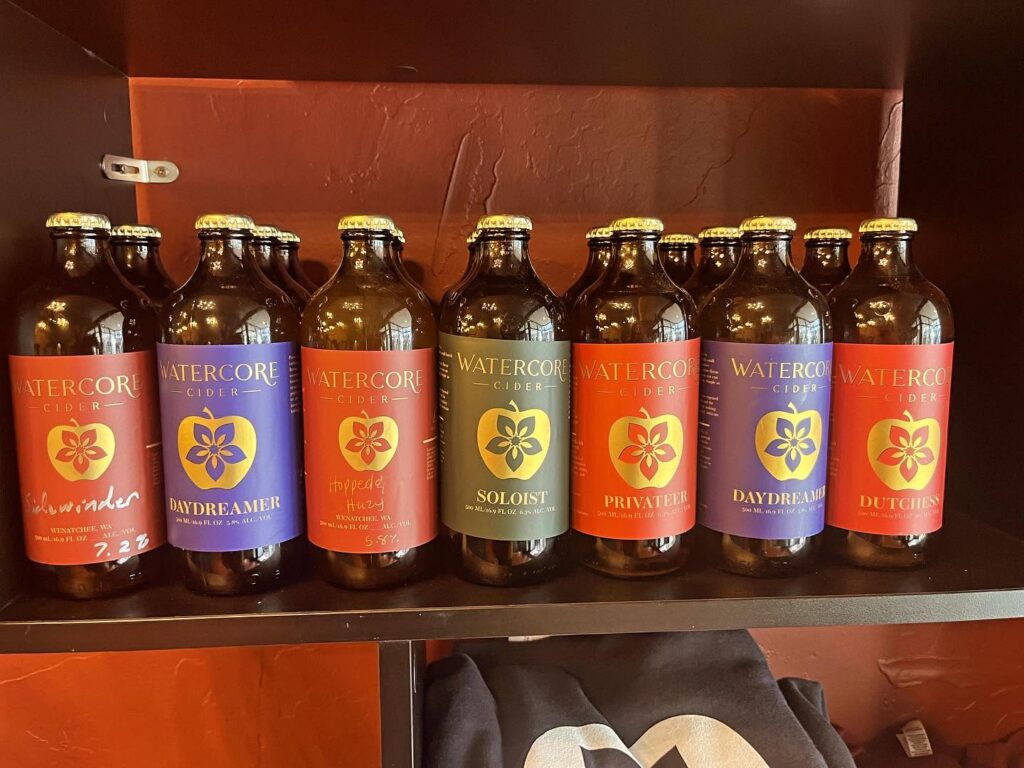
Watercore Cider owner Sarah Lindell sources apples from her family’s orchard and other small growers in the region, particularly growers producing small quantities of unusual varieties. Working on a small scale gives Watercore room to experiment with different apples, blends and micro-batches while its downtown Wenatchee taproom puts the finished product only a few miles from the orchards that supplied it.
“We find the most interesting part of producing cider is discovering how the different varieties impact flavor and how blending different varieties brings out different aspects of the apple flavor,” Lindell said.
Even the company’s name comes directly from the growing conditions of the Wenatchee Valley.
Watercore is a condition that can create translucent, water-soaked areas inside an apple as sugars accumulate in the fruit. It can make an apple unsuitable for the commercial fresh market. For Lindell, however, some of what makes watercore undesirable in a packing box makes it useful in a cider press.
“We have built our name, Watercore Cider, around the idea that Wenatchee apples are unique because of the growing conditions in the region,” Lindell said. “Watercoring is a condition that creates additional non fermentable sugar in the apple, and occurs in tree ripened apples when the nights are cold and the days are warm, a quintessential fall day for Wenatchee.”
Those sugars allow Watercore to make a dry cider that still retains a hint of sweetness, Lindell said. Producing it requires more than simply finding an apple susceptible to watercore.
“This type of cider can only be produced when you have the right climate, a variety that is susceptible to watercoring, and growers who wait to pick until the fruit is fully ripe,” she said.
For a business built around expressing the characteristics of local fruit, downtown Wenatchee is an appropriate place to pour the result. Lindell said some customers arrive already attached to particular apple varieties and are eager to taste ciders made from them. Others have little experience with cider at all.
“We also have people who come in who have never tried cider and are very excited to discover a product so appropriate for a community with an apple growing legacy,” Lindell said.
Watercore has intentionally remained small, giving Lindell the ability to experiment with micro-batches and different varieties while maintaining control over flavor and quality. The philosophy, she said, is “to let the native flavor of the apple shine through in the finished cider.”
The product may be new. The relationship between the product and the place that created it is not.
The work in the orchards has changed, too, although the fundamental rhythm remains recognizable: pruning and thinning, irrigating and protecting the crop, watching the weather, then bringing in enormous quantities of perishable fruit when the calendar and the trees say it is time.
And the economic footprint reaches well beyond the people who own orchards or pick fruit.
It reaches the warehouses along the highway, the trucks pulling away from loading docks and the scientists studying tree fruit in Wenatchee. It reaches processors turning crops into juice, ingredients, snacks, sweets and cider. It reaches businesses built to supply growers and communities populated in part by generations of people who arrived because there was work in the trees.
The region itself has diversified. Technology, tourism, health care, hydropower and other industries occupy increasingly large places in an economy once overwhelmingly associated with agriculture.
Still, fruit is difficult to escape.
It is in the names, the buildings and the celebrations. It is in century-old trees standing beside modern high-density orchards. It is in families whose grandparents planted the trees and families whose grandparents came to pick them. It is in an old candy company whose products became street names and a new cidery whose name comes from what happens inside an apple on a cold fall night.
And every year, as summer begins to give way to fall, it is there again on branches bending toward the ground.
You don’t have to see an orchard to know you’re in fruit country.
After more than a century, fruit country is no longer only where the trees are.
Andrew Simpson: 509-433-7626 or andrew@ward.media
Join the Club
Like this story? You’ll love our monthly newsletter.
Thank you for subscribing to the newsletter.
Oops. Something went wrong. Please try again later.