
journeytothegoodlife.net
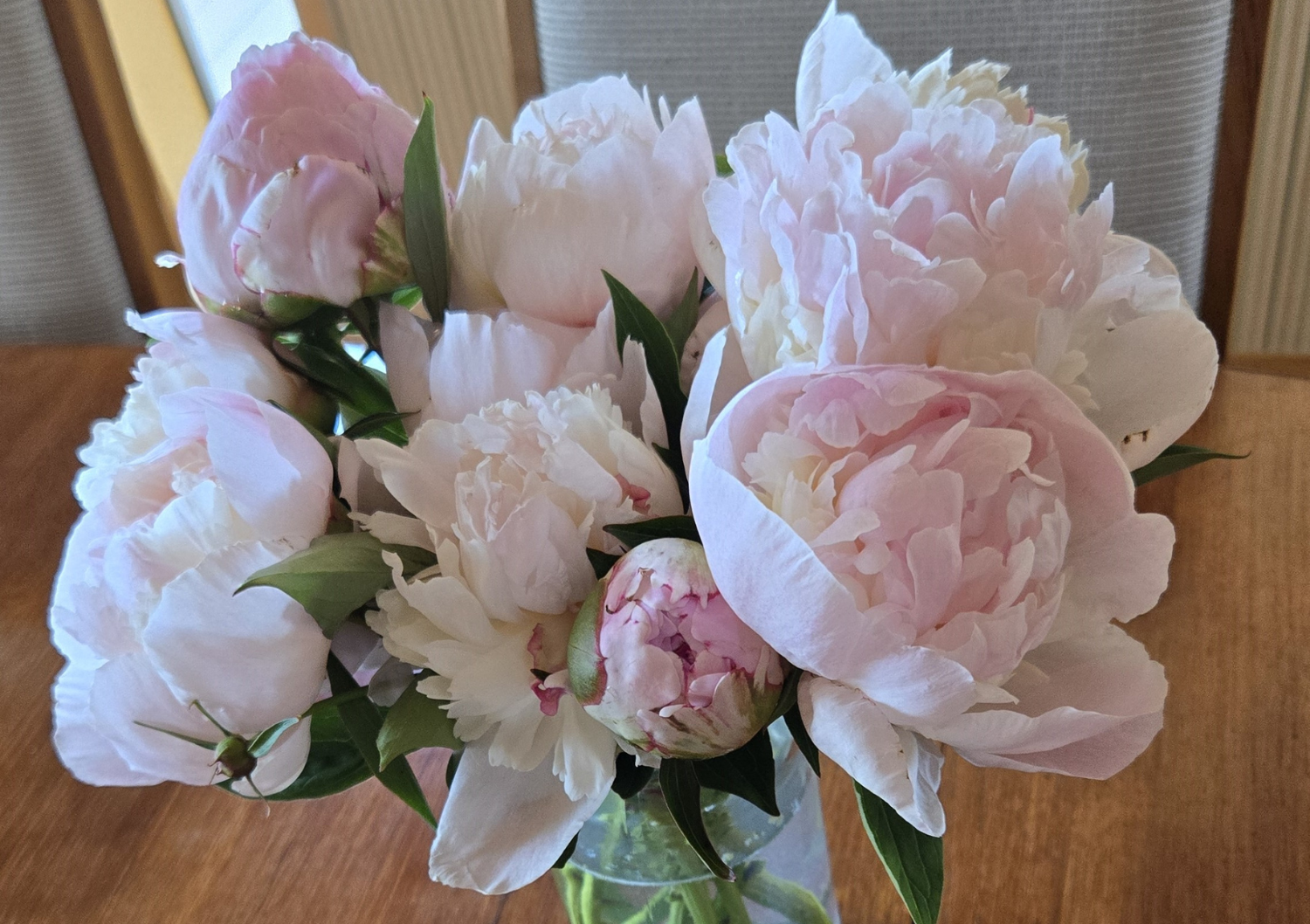
Recently, three of us lunched at Pybus Market in Wenatchee. One of my friends had brought flowers to share.
As we were finishing up, a couple walking by paused to admire them. The man asked a simple question.
“Are those roses?”
My friend smiled. “No, they’re peonies.”
Then she added that her husband’s parents had once grown a large field of peonies and that keeping these flowers around felt like carrying on a family legacy.
Soon we were introducing ourselves. Familiar places surfaced. Shared interests emerged. Stories followed. Before long, these strangers had become warmly familiar human beings with histories, passions, and surprising points of connection.
Driving home, I kept thinking about how easily that moment might never have happened.
They could have admired the flowers silently and kept walking. We could have smiled politely and returned to our lunch. Everyone could have remained in their tidy little social lanes. Instead, one simple question created an entirely different human experience.
Nicholas Epley, a behavioral scientist at the University of Chicago, would not be surprised.
In his recent book Talk: The Science of Conversation and the Art of Being Ourselves, Epley argues that many of us are living with a subtle but costly misunderstanding about other people. We think they want to be left alone. We think conversation with strangers will be awkward. We think keeping to ourselves is the safer, more comfortable choice.
We are often wrong. Epley has the research to prove it. That finding is both charming and a little sad. Because it suggests many of us are walking around unnecessarily deprived of small moments of human joy.
Epley’s larger point is that modern humans have become under-socialized. Not anti-social. Not incapable of connection. Simply under-socialized. We have built lives of extraordinary convenience and curious isolation. We scroll while waiting. We avoid eye contact in airports. We stand in checkout lines inches from one another while mentally inhabiting entirely different worlds. Phones have become emotional shields.
Human beings are relational creatures. Connection is not decoration. It is essential nourishment.
Epley’s particular contribution is showing how much connection may be available in ordinary life if we stop assuming the worst. Of course, not every stranger wants to chat. Not every grocery line should become a support group. Some people genuinely want quiet, and bless them.
But Epley’s research suggests we have tilted far too heavily toward social caution.
This reminds me of being in New York City years ago. John, my husband, started talking to those people on the subway with their heads down.
I was horrified. You can’t do that in NYC!
Well, I was wrong. Turned out that both the crusty and upper crust seemed to thoroughly enjoy the friendly lunatic from Washington state. Everyone around us was talking and laughing by the time we came to our stop.
And there is another quiet benefit other than all this joviality.
When people become human to us, even briefly, they become harder to dismiss, stereotype, or fear. Those blue-collar-crusties become Sam and Jane. Those white-collar-upper crusties become Sarah and Jim. They became people with names, histories, interests, and stories worth hearing.
That is good for communities. Good for our country as we think about celebrating an upcoming Fourth of July. But even more immediately, it is good for our own hearts.
A hello. A shared laugh. A spontaneous conversation. A small reminder that the world contains friendly people. That we belong among other humans.
Epley’s invitation is surprisingly simple. Look up. Look around. Comment on the flowers or the hat or the weather. Risk thirty seconds of possible awkwardness. And even better, open up a bit more like my friend did about the legacy of the peonies. That will take you to a whole new level of connection.
And, by the way, according to Epley this effort toward more socializing turns out to be just as enriching and enlivening for those who consider themselves introverts.
How might we move up to the Good Life during these summer months by taking advantage of our little ordinary opportunities to start a conversation and become healthier, happier, and more connected?
Join the Club
Like this story? You’ll love our monthly newsletter.
Thank you for subscribing to the newsletter.
Oops. Something went wrong. Please try again later.